The overarching aim of the REMEDY center is to improve treatment of Rheumatic and Musculoskeletal Diseases (RMDs) by randomized clinical trials assessing novel treatment and treatment strategies, in combination with research and innovation to untangle RMD causes and characteristics.
ReMeDy received funding of 128 mill NOK from the Norwegian Research Council. The project starts Spring 2022 and will run for 8 years.
Diakonhjemmet Hospital in Oslo is the host institution, partnering with Oslo University Hospital, the University of Oslo, the MAGIC Evidence Ecosystem Foundation (MAGIC) and the Norwegian Rheumatism Association.
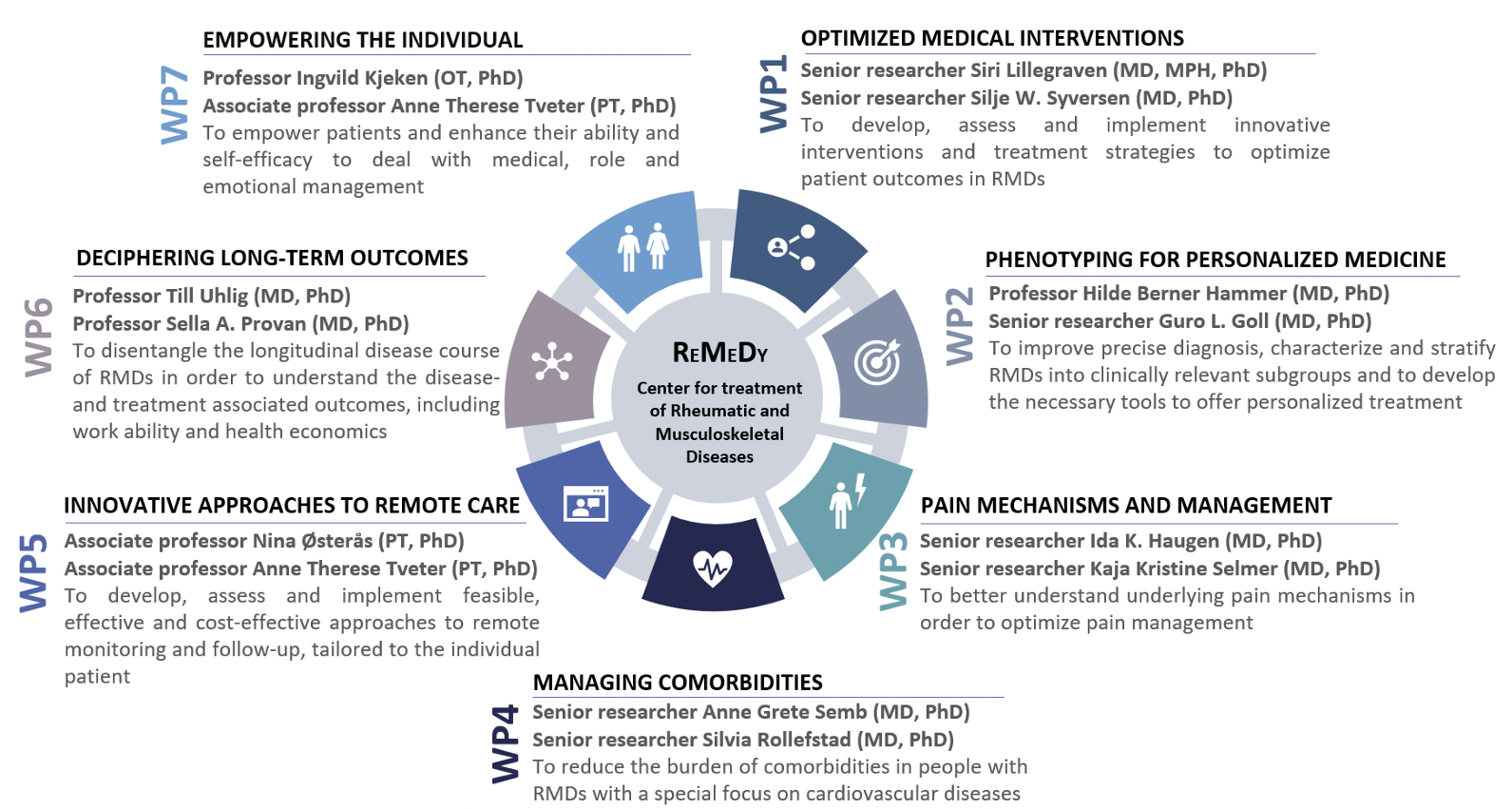
The seven work-packages (WPs) will approach the knowledge needs within RMD treatment from different angles, ensuring that the research results will benefit patients in all stages of the diseases. See figure for main objectives of the WPs.
The role of MAGIC in ReMeDy is to translate new research findings to clinical practice through BMJ Rapid Recommendations, also to be adapted and translated for national use and implementation.
MAGIC will also take part in related WPs to make sure the evidence production is fit for purpose for guideline development and use in clinical practice.
Values & Preferences Research
Our current values and preferences research explores how patients with rheumatoid arthritis judge the benefits, harms and burdens involved in tapering disease-modifying antirheumatic drugs (DMARDs). In collaboration with the BMJ Rapid Recommendations initiative, we are conducting three integrated projects:
(1) a survey to estimate minimally important differences (MIDs) for flare and remission
(2) a survey assessing benefit harm tradeoffs that inform decisions about continuing or tapering DMARDs
(3) a randomized trial evaluating whether a brief, standardized online educational session can improve patient comprehension of the tradeoff survey
This program also features an innovative online webinar that combines education with real time research using Learnlab technology. Participants learn about DMARD tapering decisions while actively contributing to evidence generation. This integrated model showcases MAGIC’s efforts to scale high quality values and preferences research through accessible digital tools. Together, these studies aim to generate more reliable information to inform guideline development and to advance practical methods for enhancing patient comprehension across diverse populations.