
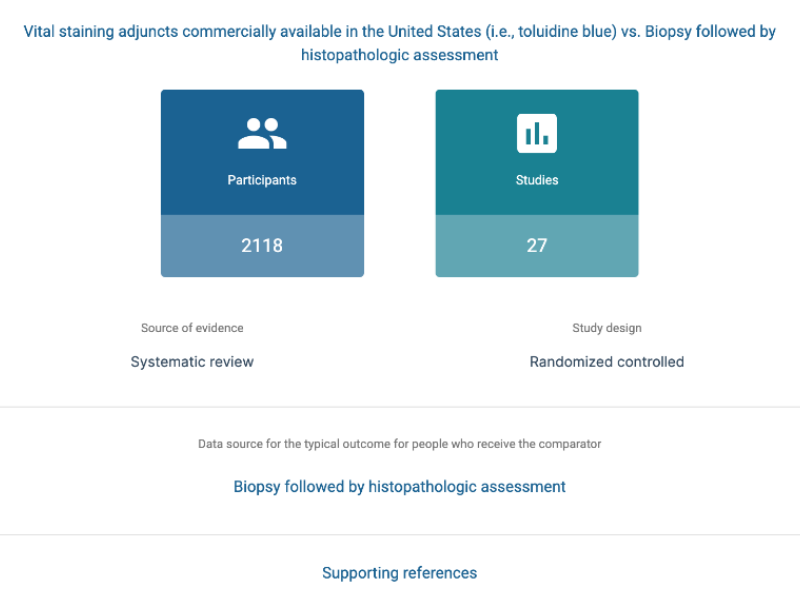
The American Dental Association (ADA)’s Living evidence-informed guideline on the early detection of oral squamous cell carcinoma and potentially malignant disorders is the first guideline developed as part of the ADA’s Living Guideline Program, a collaboration between the ADA and the University of Pennsylvania School of Dental Medicine (PDM).
We spoke with Francisca Verdugo (DDs, MSc), Adjunct Assistant Professor at the Center for Integrative Global Oral Health, PDM, about the guideline and the ADA's wider Living Guideline Program.
Francisca explained that the topic emerged from a prioritization process involving an advisory group that includes representatives from across the US oral health system — including professional associations, scientific organizations, and health system interest-holders (stakeholders). The advisory group identified early detection of oral cancer as an important area for guidance, since new diagnostic technologies continue to enter the market while clinicians need independent, evidence-based information on how these tools should be used in practice.
The team also identified the topic as particularly well suited to a living approach. Oral cancer detection technologies are evolving rapidly, with developments ranging from light-based tests to salivary diagnostics and AI-supported tools. At the same time, Francisca noted that the evidence base does not always keep pace with innovation. Although the team expected newer research to strengthen the case for some emerging diagnostic tests, they found that the available evidence often remained limited by methodological challenges and gaps in reporting of patient-important outcomes. This reinforced the value of continuously monitoring and reassessing the evidence rather than relying on static guidance that may quickly become outdated.
A key feature of the ADA Living Guideline Program is that recommendations are published as new evidence becomes available, rather than waiting for an entire guideline to be completed. The team develops and publishes sets of recommendations as they become ready, while simultaneously conducting ongoing evidence surveillance. The team adds new topics as sections are completed, and for existing recommendations, each month new studies are reviewed and assessed to determine whether they add meaningful information to the existing evidence base. Only when new evidence is judged likely to affect the certainty of evidence or the balance between benefits and harms, or when there are important changes in some of the contextual factors analyzed, does the expert panel need to reconvene. As Francisca explained, this approach helps keep the guideline current without overburdening panel members with constant updates.
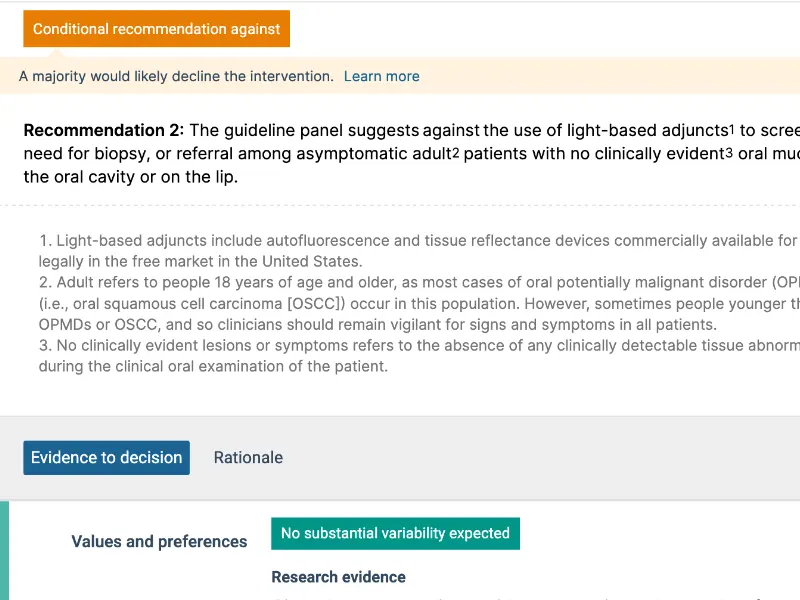
The team has also extended the living approach beyond evidence synthesis. In addition to monitoring studies relevant to existing recommendations, they conduct broad searches to identify emerging technologies and new areas that may warrant future guideline questions. Francisca described this as a form of ongoing prioritization, ensuring that the guideline program continues to focus on the most relevant topics as the field evolves.
From a publishing perspective, Francisca highlighted several aspects of MAGICapp that support the program’s workflow. In particular, the ability to publish new or updated recommendations as they are completed aligns well with the incremental nature of living guideline development. As Francisca explained, "Being able to publish individual recommendations as they are ready rather than waiting for the entire guideline to be complete is exactly what we need for this guideline." This approach also supports publication in JADA Evidence, a dedicated section within the Journal of the American Dental Association (JADA) that publishes quarterly living guidelines and rapid evidence syntheses, enabling recommendations to be disseminated and updated as new evidence becomes available. The team also uses live widgets connected to the ADA website, allowing updates made in MAGICapp to appear automatically on the ADA's published guideline pages. Francisca noted that this improves efficiency and ensures users always have access to the most current version of the guideline. In addition, she highlighted the value of maintaining a single source of content. By updating information once in MAGICapp and having those changes reflected elsewhere, the team can avoid duplicate maintenance and reduce the risk of manual errors that can occur when the same content must be managed in several places. Together, these capabilities help support the ADA's living guideline program, by ensuring that recommendations remain both current and easily accessible as new evidence emerges.