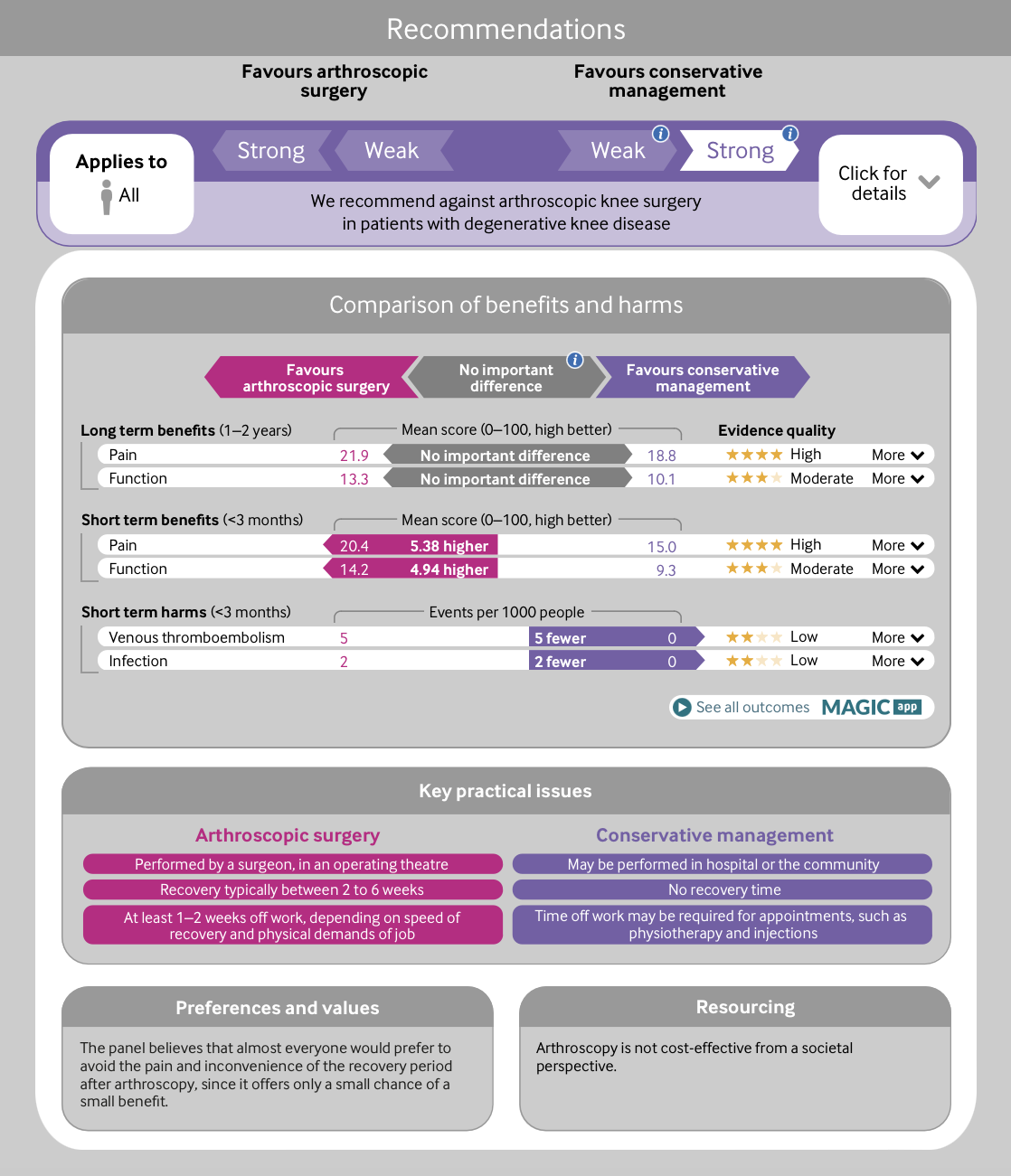
Degenerative knee disease, which many understand as knee osteoarthritis, is one of the most prevalent chronic diseases in middle aged and elderly persons. The limited evidence on the direct correlation between radiological findings and patient reported symptoms has led to differing treatment practices. Both operative and non-operative treatment options are available. Currently, arthroscopic surgery is a widespread practice, despite a fairly recent systematic review by Thorlund et al. [1] questioning the net long-term effect and value.
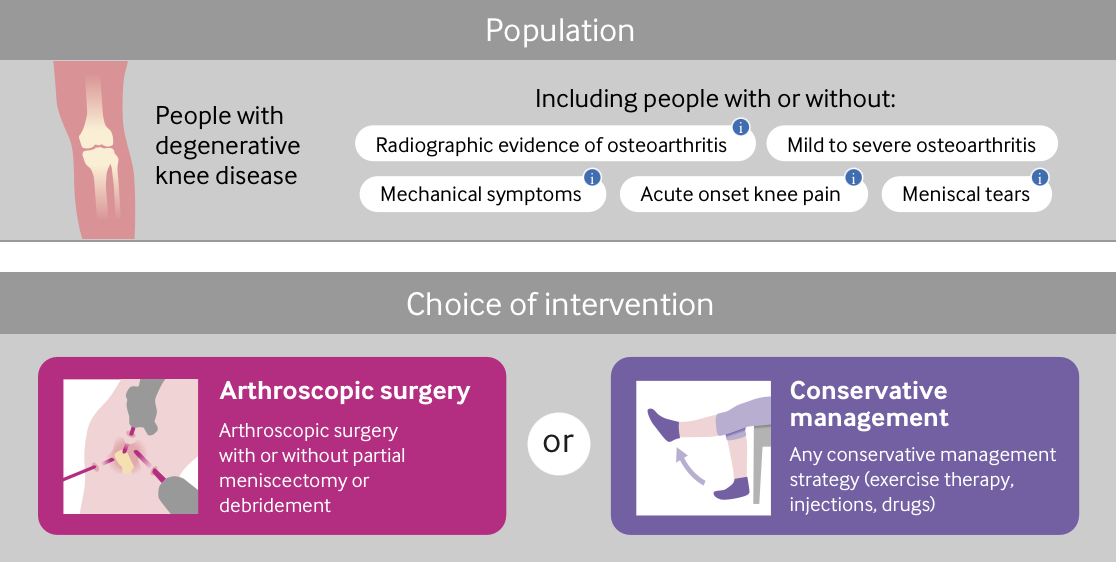
We have systematically reviewed the effects of arthroscopic irrigation, debridement and/or partial meniscectomy versus non-operative management or placebo in patients with symptomatic degenerative knee disease. We have evaluated the benefit on patient important outcomes such as pain, function and quality of life and considered the potential harms. The estimates of effect are measured in units of minimal important difference, defined as the smallest difference in score informed patients perceive as important [2].
Details supporting the recommendation, including the evidence summaries (GRADE Summary of Findings tables), practical information, and decision aids for use in the clinical encounter can be found in the full guideline in MAGICapp. The guideline can also be found published in the BMJ.